Children's safety at home
According to the American Academy of Pediatrics (AAP), children spend 80–90% of their time indoors. This is why the safety and quality of the indoor residential environment have a direct impact on a child’s health. This concerns not only the risk of falling from windows or being injured by glass, but also air quality, ventilation levels, humidity and the presence of mould.
UNICEF also emphasises that children are among the groups most vulnerable to the effects of air pollution, particularly in buildings with inadequate ventilation. As a result, modern housing requirements increasingly combine issues of window safety, energy efficiency and a healthy indoor climate.
- What hazards do children face indoors?
- How can children be protected from falling out of windows?
- What can be done to prevent insect screens from becoming a cause of falls?
- Should window glass be safety glass?
- What is a “Healthy House” and how is it related to child safety?
- Parents’ checklist: Are your windows safe?
What hazards do children face indoors?
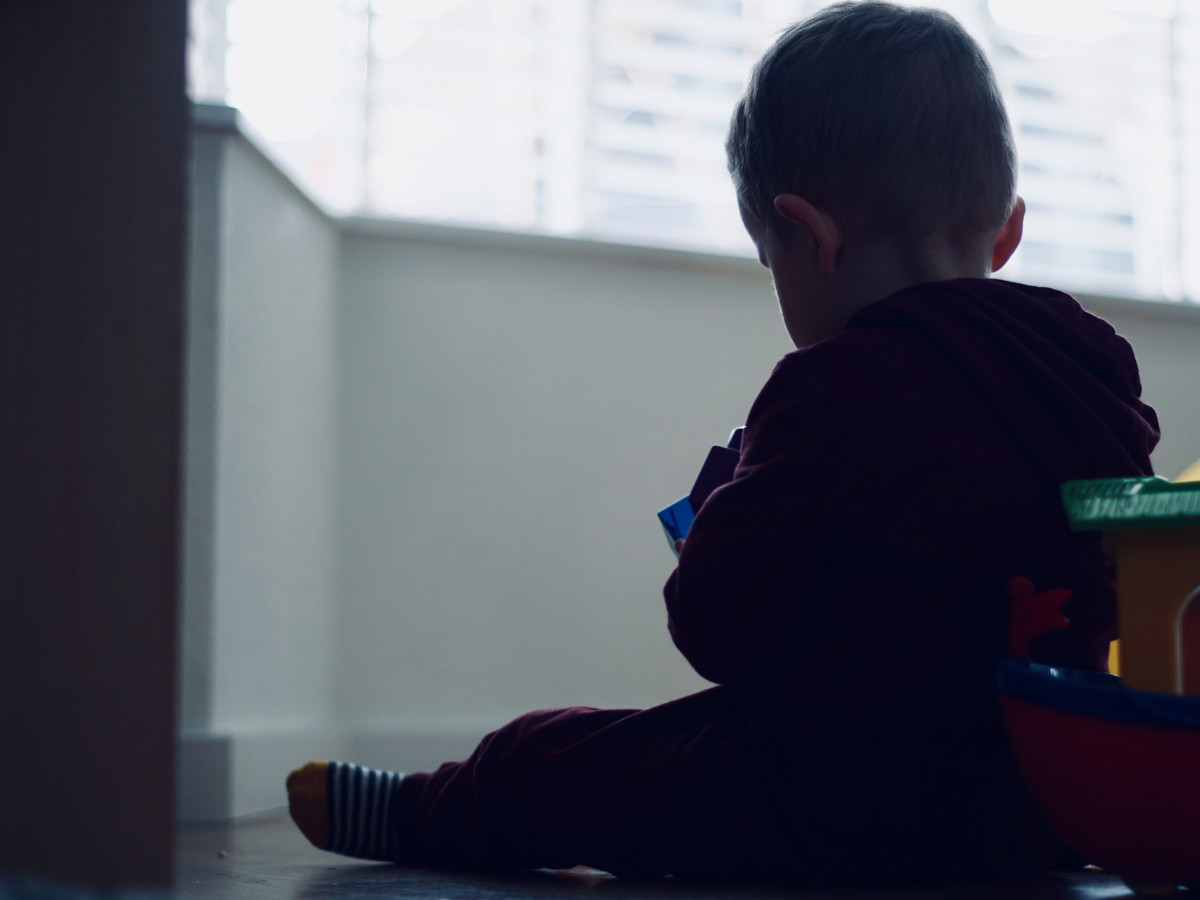
There are at least three categories of hazards associated with children spending time indoors:
- Obvious hazards — tragic cases of children falling from windows.
- Less visible hazards that shorten the lives of a much larger number of children and are linked to “unhealthy buildings”, such as inadequate ventilation.
- The risk of burns, indoor injuries and other accidents.
How can children be protected from falling out of windows?
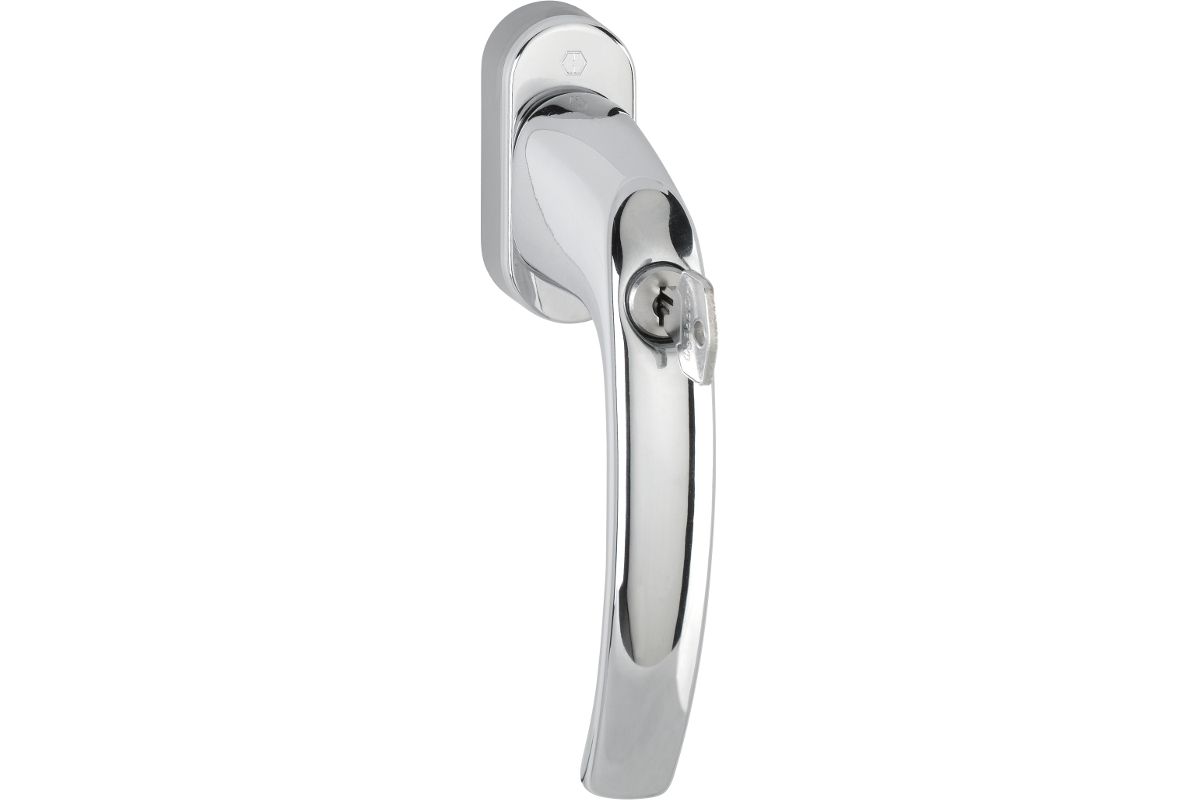
The simplest way to prevent children from falling out of windows is to make it impossible for them to open a window or door.
Options for restricting window sash opening:
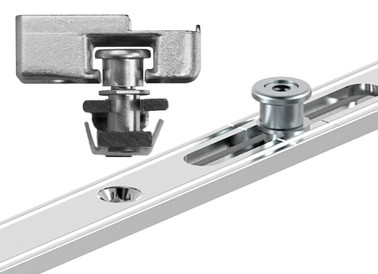
- ● Replace a standard handle with a lockable handle (approximately 5 minutes per window; no specialist required). The window must then be kept locked. However, ensuring this consistently is not always easy.
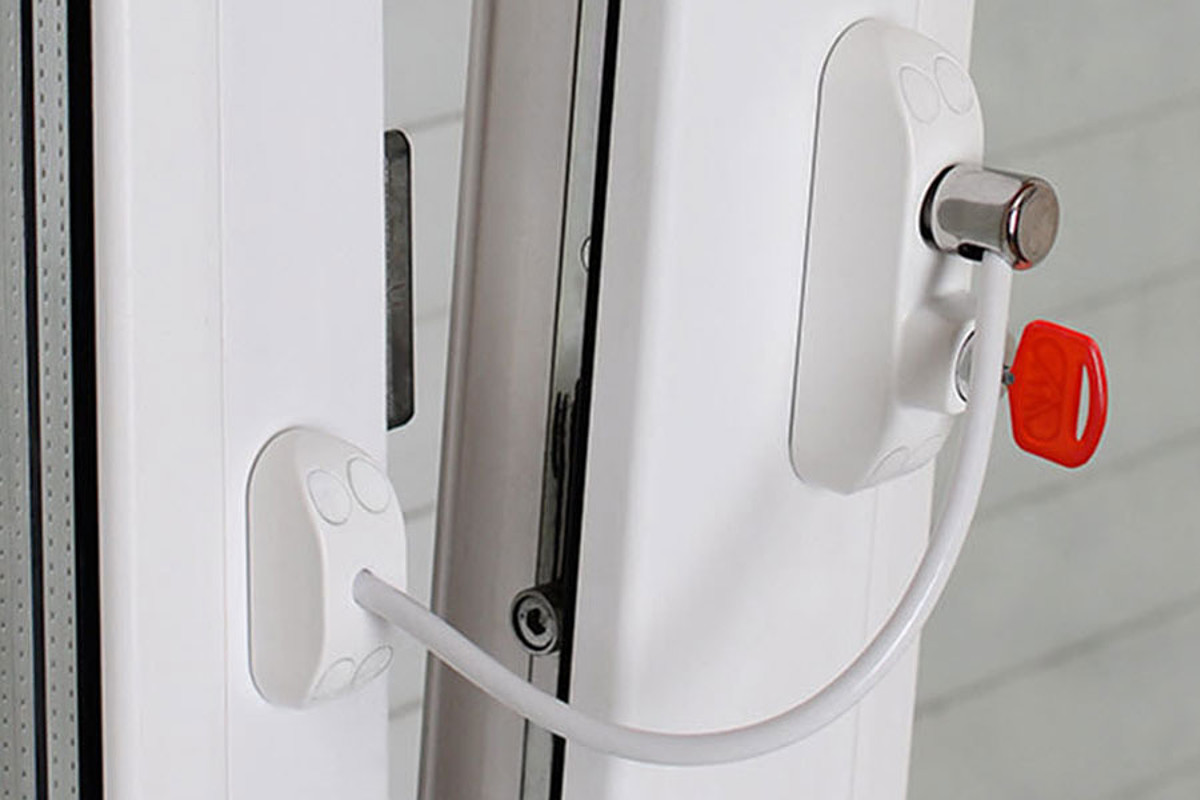
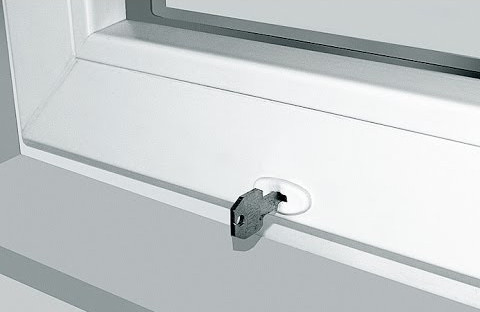
- ● Install a window restrictor lock (20–30 minutes; easier for a specialist to install, although not essential). It allows ventilation without requiring the lock to be repeatedly opened and closed, making it easier to maintain a safe condition.
If no ventilation system is installed, rooms should be ventilated regularly by opening windows when children are in another room.
What can be done to prevent insect screens from becoming a cause of falls?
Insect screens may appear to provide reliable support for children and pets, but they can easily give way under even minimal pressure. The danger is not the insect screen itself but the open window. Safety measures should therefore be implemented at the window level by restricting the possibility of opening it.
And this brings us back to the recommendations in the section “How can children be protected from falling out of windows?”.
Should window glass be safety glass?
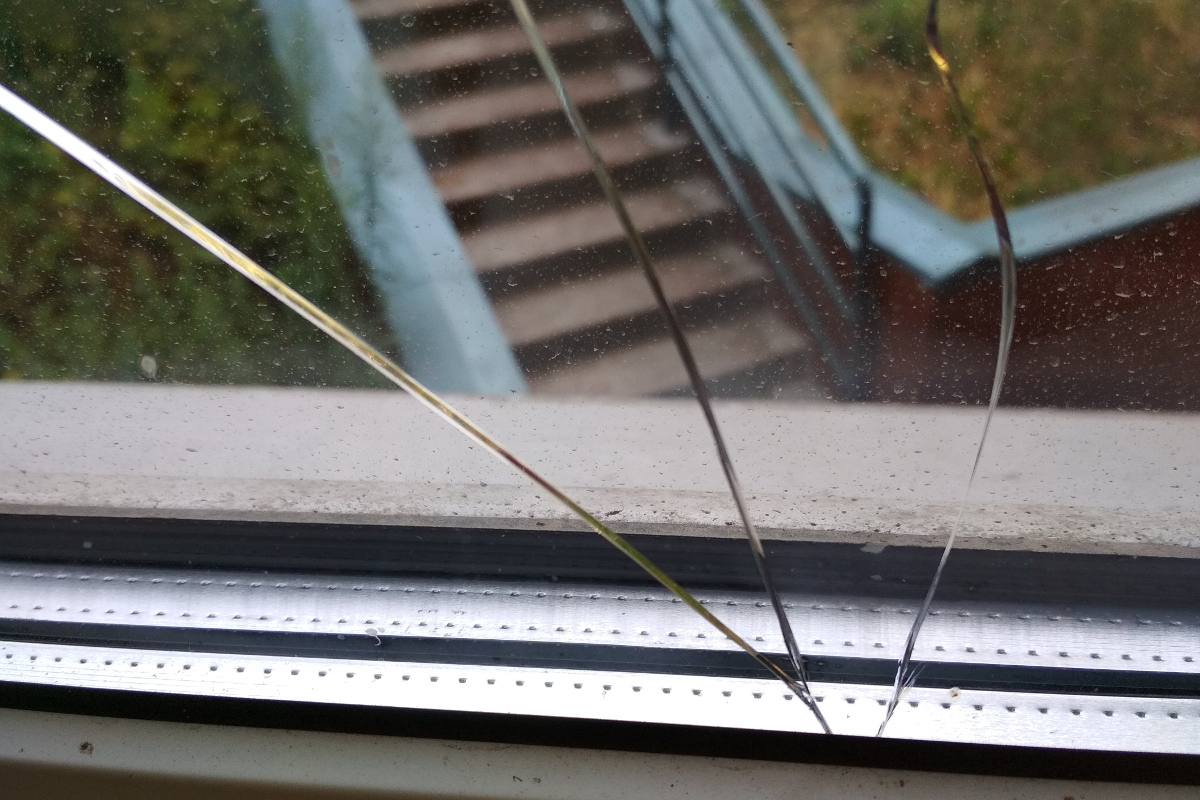
Another threat to both children and adults is injury from large glass shards.
Low-level and floor-to-ceiling glazing, as well as glass doors and transparent structures located in areas where a child may collide with them, present an increased risk. Young children also frequently climb onto window sills or tables near windows and strike the transparent barrier with toys. In such applications, it is advisable to use safety glass — either toughened glass or laminated glass (triplex), which significantly reduces the risk of injury after breakage.
Energy-efficient toughened glass has become more affordable, and OKNA.ua recommends that all floor-to-ceiling glazing should use either toughened glass or laminated glass (similar to automotive windscreens).
What is a “Healthy House” and how is it related to child safety?
The concept of a “Healthy House” has emerged relatively recently. According to the Healthy Homes Barometer 2019, based on research conducted by RAND Europe and EU-SILC statistics, more than 26 million children in Europe — approximately one in three children — lived in homes with at least one unhealthy indoor environmental factor. These include mould on window reveals, unsuitable humidity levels, excessive CO2, dust and other airborne gases and particles. The World Health Organization (WHO) links dampness and mould with a higher prevalence of respiratory symptoms, allergies and asthma.
The latest Healthy Buildings Barometer 2024 shows that the problem remains significant: around one quarter of Europeans live in buildings where indoor air quality does not meet national standards, while more than 30 million people live in homes with insufficient daylight. Consequently, modern housing requirements increasingly address not only energy efficiency but also ventilation, access to natural daylight and overall indoor environmental quality.
Ukraine does not yet have a directly comparable indicator, as the EU-SILC survey is only being introduced by the State Statistics Service from 2026. However, due to housing damage, energy vulnerability and increasing poverty among families with children, the issue of healthy housing is equally relevant in Ukraine.
Many of these problems can be addressed through windows and ventilation. Energy-efficient windows and installation in accordance with DSTU standards reduce heat loss when windows are closed. This enables occupants to ventilate rooms regularly without significantly increasing heating costs. As a result, indoor air quality improves, which is an essential condition for a healthy home and a longer life.
Parents’ checklist: Are your windows safe?
- □ All windows accessible to children are fitted with a child safety lock, a key-lockable handle, or an opening restrictor.
- □ Insect screens are not considered a means of fall protection.
- □ There are no beds, tables, chairs, bedside cabinets, or other items near the windows that a child could climb on.
- □ Floor-to-ceiling and low-level glazing is made of toughened safety glass or laminated safety glass.
- □ Children do not have access to the keys for lockable window handles.
- □ Rooms are regularly ventilated or equipped with a ventilation system.
- □ There is no condensation, fungal growth, or mould on the window reveals or walls adjacent to the windows.
If you answered “no” to even one item, this risk should be addressed.