Features of the US window market illustrated by aluminium systems
The American market for window and curtain wall systems differs significantly from the European market, both in terms of regulatory requirements and approaches to design and manufacturing. Yevhen Hredunov, CEO of Talisman, who has been working in the field of architectural aluminium systems since 1992, explains these differences through the example of aluminium systems.
Mr Hredunov is the author of 16 patents, inventions and utility models related to aluminium systems. Since 2018, Talisman has been working directly with the US market for curtain walls, windows, doors and interior partition systems.
Every product market reflects the local mentality, combined with the capabilities of supply and demand for a particular product, as well as the legislative framework governing a specific territory.
The market for aluminium building systems is no exception, ranging from large-scale glazed curtain wall developments to simple interior solutions.
- Differences in mentality between the Ukrainian and US markets
- Differences in system design
- The approach to the cost of materials and labour differs significantly
- Without insurance, you will not be allowed to work on major projects in America
- Permits and certification
- Window and door sales system
- National characteristics of the US fenestration market
Differences in mentality between the Ukrainian and US markets
In Ukraine, customers usually choose aluminium systems based either on a well-known brand or the lowest price. At the same time, little attention is paid to whether the product is domestically manufactured or imported. Moreover, if the system is made in Ukraine, it is often assumed that it should cost less simply because of its origin.
In the United States, American brands (such as Kawneer, CRL, IGT, Andersen, Pella, YKK AP, Arcadia, Western Window Systems and Fleetwood) are among the most expensive and the most popular. They are regularly specified in projects, and customers are willing to pay the corresponding price. These brands are trusted and valued by both major corporations and ordinary Americans alike. Unlike in some markets, there is no perception that domestic products are inherently inferior, even though the quality offered by different manufacturers may vary considerably.
In contrast, Ukrainian investors, fabricators, architects and contractors actively promote and use foreign brands, even though they often perform exactly the same functions as domestic alternatives. Moreover, many of these "foreign" systems are actually manufactured in Ukraine. For example, Reynaers, Aluprof and Schüco extrude their aluminium profiles in Ukraine. The profiles are also powder coated locally by companies such as Polymer Color, Europeint and others. Polymer Color additionally provides anodising services for aluminium profiles used by various system suppliers.
Differences in system design
There are also notable differences between the Ukrainian and US markets in terms of the range of products available and their structural design.
Single-Hung Windows, Double-Hung Windows and outward-opening Casement Windows remain among the most popular window types on the American market.
The main window types used in the US market are generally referred to as follows:
- • Single-Hung Window
- • Double-Hung Window
- • Casement Window
- • Awning Window
- • Hopper Window
- • Sliding Window or Horizontal Sliding Window
- • Picture Window
- • Fixed Window
- • Bay Window
- • Bow Window
Another feature that may seem unusual from a European perspective is that glazing beads are typically positioned on the exterior side of both the sash and the frame, rather than on the interior side, as is customary in most European countries.
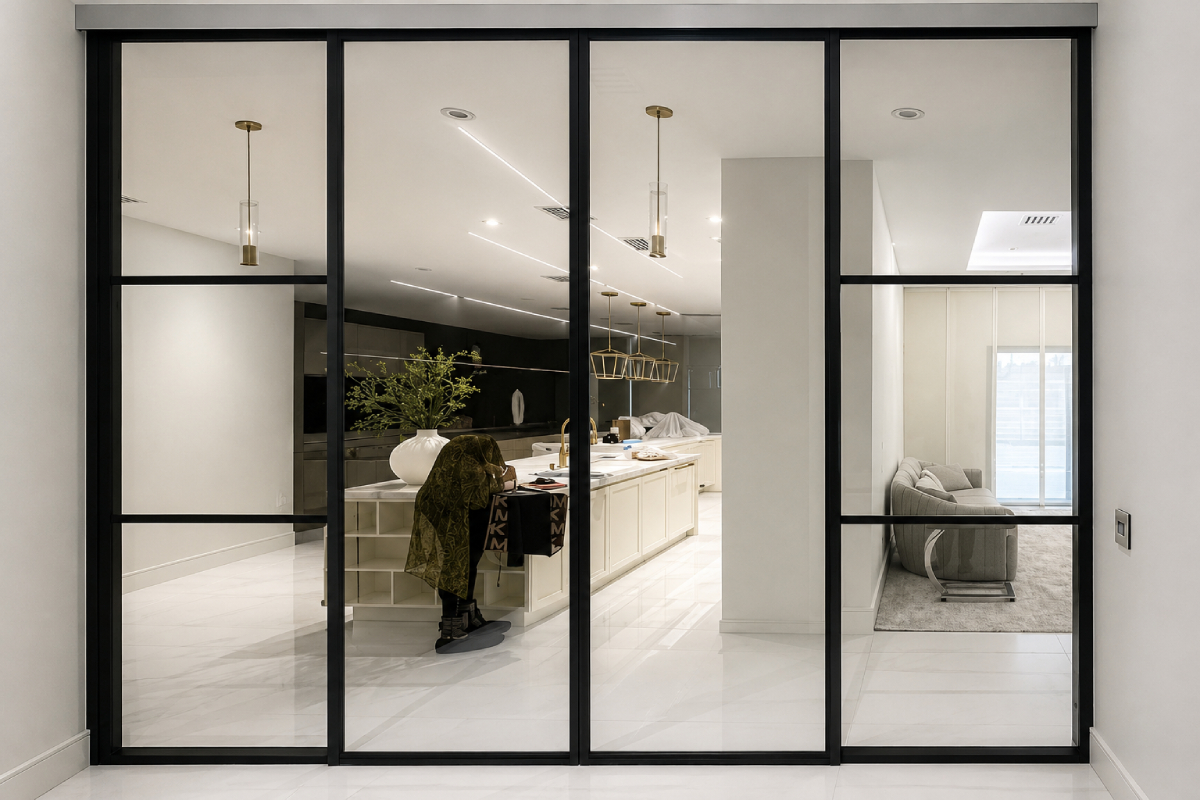
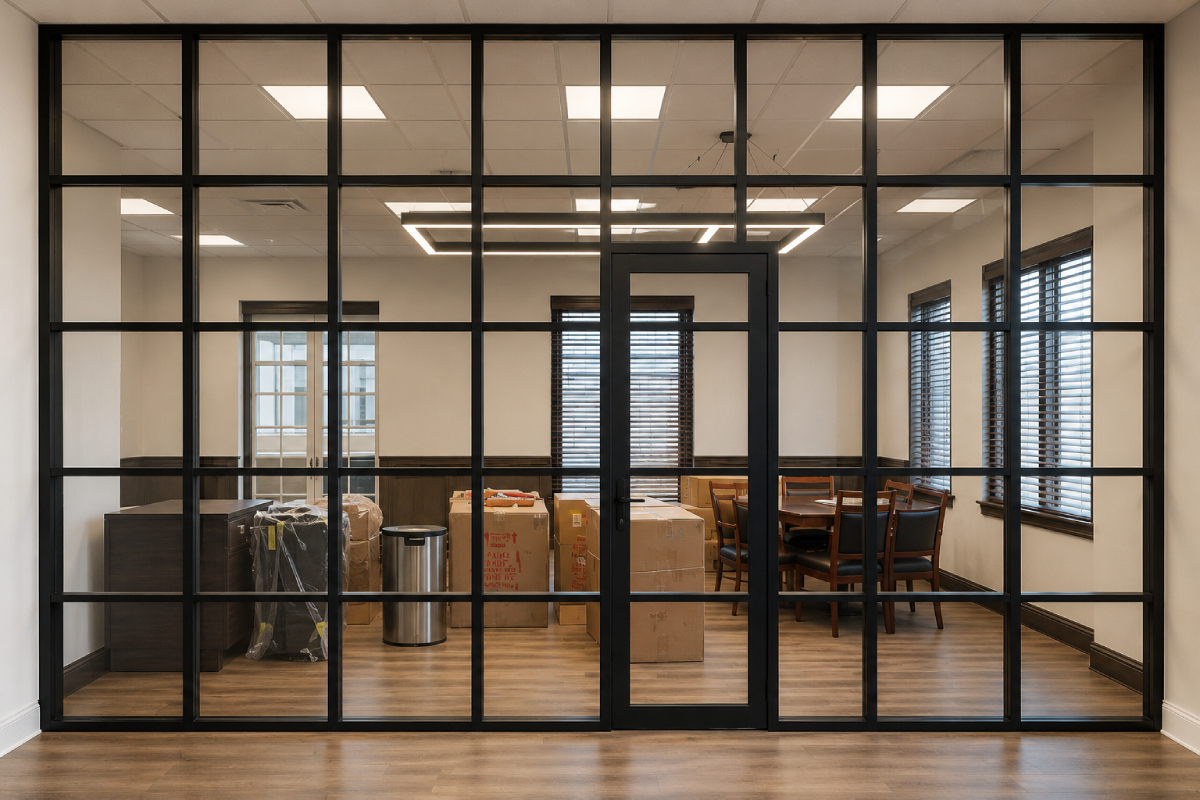
On the ground floors of buildings housing shops, cafés, hair salons and other commercial premises, glazing with single glass in non-thermally broken aluminium frames, combined with non-thermally broken doors, is still widely used. The reasoning is straightforward: since these doors are opened frequently throughout the day, many clients see little value in installing thermally broken door systems.
The approach to the cost of materials and labour differs significantly
In Ukraine, the price of completed window and façade systems, including installation, largely depends on the cost of the materials used, while labour accounts for a much smaller share of the total price. Although labour costs in Ukraine have also been rising in recent years.
In the United States, however, the balance between material and labour costs is fundamentally different. Installation alone can sometimes account for up to two-thirds of the total project cost, whereas in Ukraine the opposite is generally true.
This is driven by high labour costs, insurance expenses, logistics, the hire of installation equipment and transport. Skilled production workers and experienced installers typically earn from USD 30 per hour, while on certain projects hourly rates may reach USD 150. Helpers generally receive between USD 20 and 25 per hour.
This cost structure has a direct impact on the selection of materials and manufacturing and installation technologies. More expensive systems are often preferred if they help reduce installation time. Unitised curtain wall systems are one example of this approach.
The pricing model for public and municipal projects is also fundamentally different from what we are accustomed to. Such projects may cost several times more than comparable commercial projects, and the reason has nothing to do with corruption.
Only a limited number of companies are eligible to undertake this type of work. Qualification requirements play a crucial role. Contractors must complete a series of formal procedures and inspections and obtain expensive insurance policies. In central urban areas, additional costs may include expensive parking, toll roads and bridges.
However, these are not the primary reasons for the high project costs. One of the key requirements imposed by public and municipal clients is that workers involved in the project must receive at least a specified minimum wage. In some cities, these rates are very high, and employees genuinely receive this level of remuneration.
The rationale behind this policy is that public funds allocated to a project should not only finance its implementation but also support local income levels and ultimately return to public budgets through taxation.
In addition, public and municipal projects often give preference to products manufactured in the United States, even when their cost is substantially higher than the market average.
Without insurance, you will not be allowed to work on major projects in America
Insurance, which is still rarely used in Ukraine, is an essential part of doing business in the United States. Without adequate insurance cover, a company will simply not be allowed to undertake major projects or carry out high-value work.
It is important to distinguish between different types of insurance. For example, an installation contractor must carry liability insurance covering damage that its employees may cause to the client's property. Such property may belong either to the building owner (the landlord) or to a tenant. Separate insurance policies cover the company's own assets as well as the health and safety of its employees.
The more demanding and prestigious the project, the more expensive the required insurance cover is likely to be.
At the same time, insurance should not be viewed as eliminating all business risks. If an insured event occurs and the company files a successful claim, the losses will be compensated. However, when the policy is renewed, insurance premiums may increase severalfold.
Permits and certification
The system of permits and certification deserves separate consideration.
Different states have different regulatory requirements. Moreover, regulations may even vary between individual regions within the same state. For example, some of the strictest requirements for external glazed building systems apply in Florida, specifically in Miami-Dade County and Broward County. In practice, this area encompasses around thirty cities and towns commonly referred to as Greater Miami.
Manufacturers whose products are certified to meet the requirements of these counties gain a competitive advantage not only in Florida but also in many tropical and subtropical regions around the world where hurricane resistance is an important consideration. Although such certification does not formally grant access to other markets, many investors and architects voluntarily specify these products as part of their own corporate standards.
In general, the certification process is similar to that used in Ukraine. There is, however, one fundamental difference: certification applies not to an entire system but to a specific product type.
For example, a large construction project may include between seven and fourteen or even more different product types, including doors, entrance systems, sliding systems, windows and curtain wall components. Consequently, each individual product type must obtain its own certificate.
The cost of testing starts at approximately USD 30,000 for a single product. Few products pass certification on the first attempt, although repeat testing is less expensive. As a result, manufacturers generally need to invest between USD 500,000 and USD 1 million to build a sufficiently comprehensive portfolio of certified products.
In South Florida, certification typically consists of several stages:
- Review of product drawings. A locally licensed engineer examines the drawings of the samples submitted for certification, together with the relevant technical product catalogues.
- Testing, including impact resistance, wind-driven rain performance, watertightness and other operational performance characteristics.
- An audit of the manufacturing facility where the products are produced.
Readers may have noticed that thermal performance testing is absent from this list. In Florida, this is indeed not considered a priority. In the northern states, however, considerably greater emphasis is placed on thermal performance.
Other states may impose additional or entirely different requirements. There are even states where mandatory certification does not exist and product requirements are determined solely by the client's corporate standards.
At the same time, manufacturers may voluntarily, or at the request of a specific project, undergo additional specialised testing, for example for acoustic performance.
In practice, there are cases where an architect or developer accepts test results or engineering calculations carried out in another state or even another country and approves the use of those products on a particular project.
Another distinctive feature concerns construction projects on Native American reservations. These territories operate under their own rules and approval procedures established by the tribal chief or the community.
Another interesting practice is the possibility of obtaining approval from the local municipality to use a specific non-certified product on a specific project.
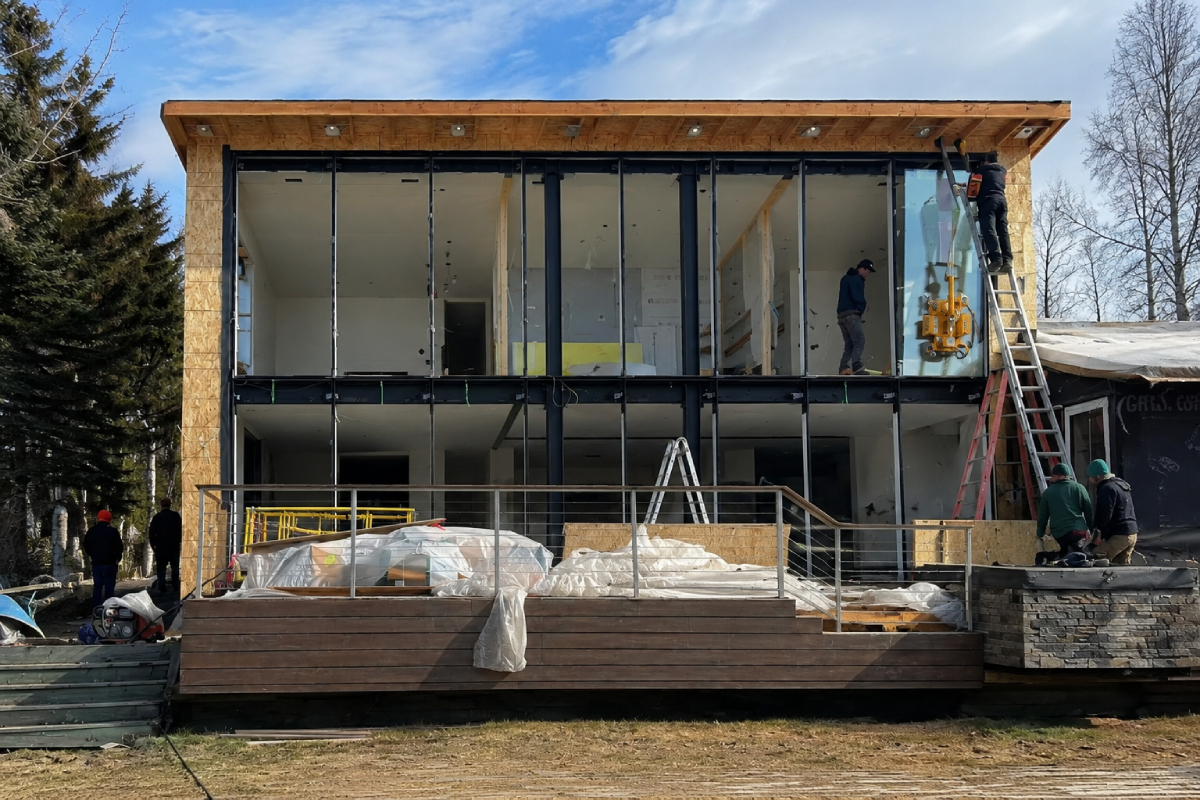
Another approach that may seem unusual from our perspective is the installation of windows and doors in Alaska. The installation contractor is responsible only for positioning the unit within the opening, mechanically fixing it in place, ensuring it is level, and checking the operation of the hardware. The installation gaps are intentionally left unsealed.
Subsequent sealing is carried out by another contractor, most often the general contractor. The reasoning behind this approach is that the general contractor is responsible for the overall airtightness and weathertightness of the building. Consequently, it seals all junctions, whether they involve windows, doors or the roof.
Window and door sales system
The US window and door sales system generally consists of several key participants:
- • Manufacturer.
- • Retailer. Manufacturers often operate their own or franchised showrooms. There are also warehouses and showrooms specialising in imported products, and in some cases entire retail chains dedicated to this sector.
- • Installation company. This may be a large contractor, a family-owned business or a small company comparable to a sole trader in Ukraine.
While manufacturers sometimes also act as retailers of their own products, they rarely carry out installation themselves. Large manufacturers and distributors generally do not provide installation services. Installation is typically performed by specialised contractors. In some cases, retail showrooms maintain their own installation teams or work with subcontracted crews.
Major window and door manufacturers supply their products only to installation companies that meet established qualification requirements. These may include employing a manager who has completed state-required professional training, maintaining a dedicated office and warehouse or production facility of a specified size, and having an adequate number of employees.
At the same time, retail chains similar to Ukraine's Epicentr, such as Home Depot and Lowe's, sell certified standard-size products that can be purchased by any customer.
The same applies to warehouses and retail outlets operated by smaller window and door dealers, which generally sell their products to all customers without additional restrictions.
Unlike in Ukraine, there is no clear distinction in the United States between the roles of company director, production worker and installer. In the thousands of small businesses operating across the market, owners often perform a wide range of tasks themselves, including administration, site measurements, manufacturing, packaging, deliveries, transportation, installation and even cleaning.
The main reason for this approach is the high cost of labour. Small companies cannot afford to employ unnecessary staff, so business owners frequently combine managerial and operational responsibilities.
National characteristics of the US fenestration market
The highly international composition of the US population has a significant influence on the structure of the market. This is further shaped by the distribution of roles between business owners and employees. Large companies are predominantly owned by Americans, whereas immigrants make up a substantial proportion of small-scale retailers and installation contractors.
Most installers and installation companies are of Latin American origin. The largest groups come from Venezuela, Colombia, Mexico and Cuba. The market also includes Puerto Ricans, Guatemalans, Hondurans, people from Caribbean countries and representatives of many other nationalities.
Among company owners, installers and sales professionals, one can also find people from Ukraine, other former Soviet republics and numerous other ethnic communities. In recent years, the number of Ukrainians working in the US market has increased significantly. At times, it even seems easier to find a Ukrainian installation crew in Miami than in Brovary.
Ukrainians are actively involved in many sectors of the US economy and often contribute to raising quality standards. This includes construction, renovation, real estate, small-scale manufacturing, installation services and the handyman services sector.
Talisman, which has now been operating for 33 years, has been active in the US market since 2018. During this time, we have established a network of trusted dealers and opened our own warehouse, office and showroom.
Our practical experience has demonstrated the need to develop products specifically adapted to the US market or even to individual states and regions. These are precisely the solutions we are currently developing as we continue to expand into new market niches.
At the same time, related sectors increasingly feature products manufactured in Ukraine, including interior doors, uPVC windows, kitchens, furniture, finishing materials, steel entrance doors and other products.
Given the scale of the American market and its purchasing power, it remains one of the most attractive markets in the world. Entering it requires considerable investment and time. However, for companies pursuing a long-term growth strategy, it can become a reliable and highly promising direction for future development.