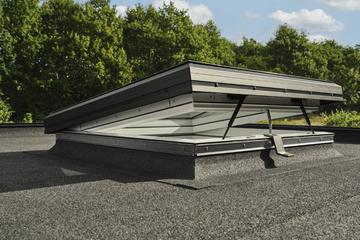
The company VELUX has presented its vacuum glazing for roof windows, reports the VELUX Group. The presentation took place at the DACH+HOLZ exhibition in Cologne (Germany). The development was created together with Guardian Glass.
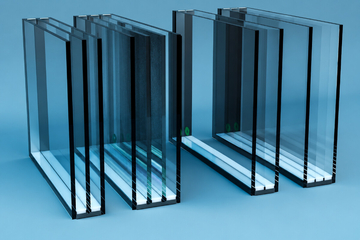
In the new construction, the space between the panes is not filled with argon or krypton. Instead, it is replaced by a vacuum, which significantly reduces heat transfer. As a result, the manufacturer achieves thermal insulation characteristics similar to triple glazing, but in a significantly thinner and lighter construction. The technology is characterised by a barely noticeable dot pattern created by microscopic spacer elements between the panes, which do not affect the view.
VELUX plans to produce two variants of the vacuum glazing: Single Vacuum Glazing and Vacuum Hybrid.
The Single Vacuum Glazing variant features an ultra-thin construction with two panes and demonstrates thermal insulation performance comparable to triple glazing. The absence of the third pane allows the weight of the construction to be reduced by 1.5–5 kg for a window of size MK06, depending on the configuration. According to the manufacturer, the glazing unit itself has approximately a 30% lower carbon footprint. A roof window with such glazing achieves a thermal transmittance coefficient of Uw = 1.0 W/(m²K). The thickness of the glazing unit is only 11.5 mm, whereas a standard triple glazing unit with similar characteristics is about 38 mm thick, and double glazing is about 26.4 mm.
The first launch is planned for 2026 in the United Kingdom and Ireland within the VELUX Heritage line, where preserving the authentic appearance of buildings is important.
The second version, Vacuum Hybrid, combines vacuum glazing with a third pane separated by a gas-filled cavity. Such a construction achieves a Uw coefficient of 0.83 W/(m²K) and provides sound insulation of 38 dB. According to the company, this corresponds to the performance of one of the most efficient glazing units, VELUX IGU 67, but with a lower carbon footprint — approximately 5% less for the entire window and 12% less for the glazing unit itself.
According to the company, VELUX will consider sales of the new products in European countries depending on interest from projects.
VELUX began testing vacuum glazing more than 20 years ago and even offered early versions on the German market. At that time, demand for products with very low thermal transmittance remained limited, and the advantages of the technology did not yet exceed the capabilities of standard triple glazing.
In recent years, vacuum glass technology has improved significantly. Manufacturers have started using tempered glass, improved vacuum sealing and applied systems to absorb residual gases. Building on these developments, VELUX has been developing its vacuum glazing technology over the past decade and, since March 2024, has continued this work together with Guardian Glass.
It should be recalled that earlier FINEO vacuum glass by AGC received CE marking.

Photo: VELUX Group
New VELUX vacuum glazing units — a thinner and lighter way to improve the quality of roof windows
VELUX entered the vacuum glazing market
ID no: 24161


Sep 15, 2026







Sep 22, 2026