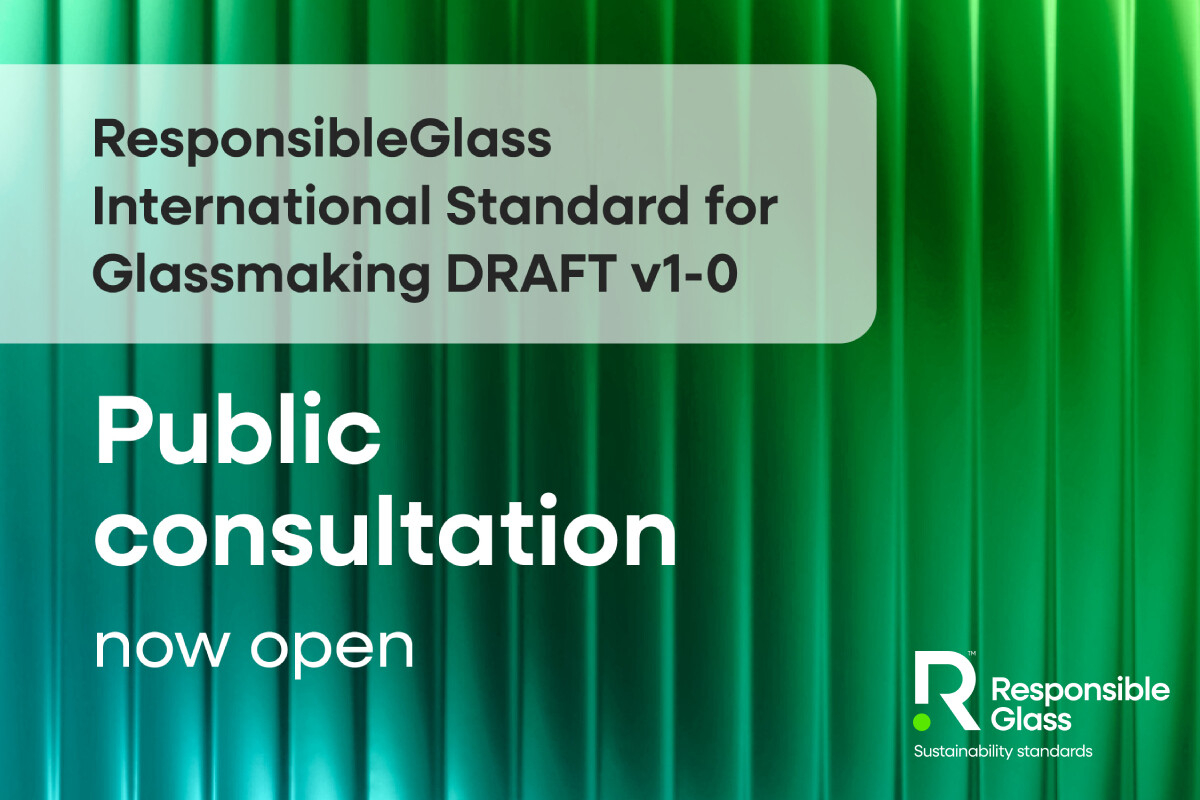
ResponsibleGlass has published the first draft of the International Glass Manufacturing Standard. The organisation announced this on its website. It marks the first step towards establishing a global standard, certification scheme and labelling system for the glass industry.
The draft standard is currently undergoing a public consultation. The consultation will run for 60 days, from 20 July to 18 September 2026. Companies, suppliers, customers, public authorities, civil society organisations and other stakeholders are invited to submit comments and proposals.
ResponsibleGlass is a non-profit organisation established in 2025 to increase the glass industry's contribution to the sustainable development of society. The initiative brings together glass manufacturers, raw material suppliers, recycling companies, brands, sustainability experts and civil society organisations. At present, the vast majority of the organisation's members are based in the United Kingdom.
Glass is used in construction, automotive applications, food packaging, solar panels and many other technologies. At the same time, global glass manufacturing generates around 95 million tonnes of CO₂ emissions each year. Unlike the steel and forestry industries, the glass sector has so far lacked a single international sustainability standard. ResponsibleGlass aims to close this gap.
The ResponsibleGlass draft standard establishes a clear and independently verifiable framework for responsible glass manufacturing. It covers the entire supply chain, from raw material extraction and energy supply to glass production, product design and recycling. Under these requirements, glass manufacturers seeking ResponsibleGlass certification will undergo an independent assessment. The assessment will cover governance, responsible sourcing of raw materials, environmental impact, working conditions, impacts on local communities and circularity.
The draft standard consists of six sections:
Management systems. Companies must have policies and reporting systems that enable them to manage sustainability performance effectively.
Responsible business practices. This includes legal compliance, anti-corruption measures, stakeholder engagement, transparency and public reporting of sustainability performance.
Responsible sourcing of raw materials. Companies must understand and assess the environmental and social impacts of the key raw materials, secondary materials and energy sources used in glass manufacturing. The standard also improves supply chain transparency, covering everything from silica sand and soda ash to recycled glass and energy resources.
Environmental performance. This section covers greenhouse gas emissions, energy consumption, water stewardship, biodiversity, waste management, air emissions and pollution. Companies are required to measure, monitor and disclose their performance against key sustainability criteria.
People and communities. This section addresses occupational health and safety, labour rights, human rights, and engagement with local communities affected by glass manufacturing activities.
Circularity and sustainable product design. This section encourages greater use of secondary materials, improved recycling and recovery performance, and the development of glass products with a lower environmental impact, both during use and at the end of their service life.
The standard also introduces common rules for measuring and reporting sustainability performance. Glass manufacturers will use consistent definitions and reporting methodologies for carbon emissions, recycled content and responsible sourcing. This will enable customers and other stakeholders to compare the performance of companies across the industry. These requirements will form the basis of a certification and labelling system for responsibly manufactured glass.
According to the organisation, the consultation period plays a key role in ensuring that the final version of the standard reflects the views of the entire industry. ResponsibleGlass is collecting feedback from companies, customers, recyclers, public authorities, civil society organisations and other stakeholders before the standard is finalised.
Read also: NovaSklo signs agreement with Pilkington Technology Management Limited for engineering support during the construction of a float glass production line in Kyiv region.
The draft standard was developed with the participation of stakeholders from across the glass industry supply chain
ResponsibleGlass unveils draft of the first global standard for sustainable glass manufacturing
ID no: 24378




Sep 22, 2026



Sep 15, 2026