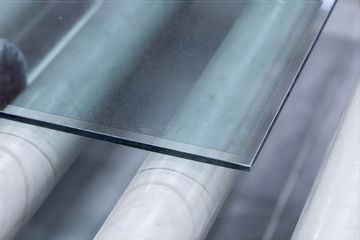
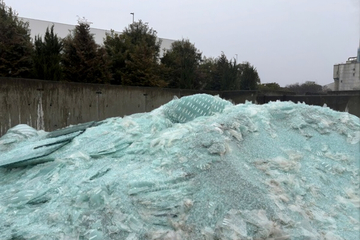
Belgian company Maltha Glass Recycling and partners in the European PHOTORAMA project have presented the results of recycling glass from old solar panels. They spoke at the EU PVSEC conference in Rotterdam, the Netherlands, held from 14 to 18 September 2026. According to Maltha, the company processed 75 tonnes of panel glass into cullet, which Saint-Gobain used in flat glass production.
The project does not completely crush the modules. Instead, the partners first separate the glass from metals and polymers. According to the presentation, they use a water jet for crystalline silicon modules. For thin-film modules, they use pulsed light irradiation (flash). The process leaves intact, clean sheets of glass.
Composition analysis showed that the impurity content did not exceed 2,500 parts per million (ppm). This is consistent with standard patterned solar glass. Antimony oxide Sb₂O₃ accounted for around 0.23–0.24% by weight in the samples measured. The authors state that the antimony content is acceptable for a cullet share of up to 20%. Maltha identifies four barriers to large-scale adoption: antimony in certain types of glass, the scaling-up of technologies, the absence of clear European rules on the reuse of solar panel glass, and market acceptance of recycled raw materials in high-quality products.
The project also tested the reuse of intact glass sheets in new modules. The partners assembled four modules using recovered glass and three reference modules using new glass. The short-circuit current of the modules with recovered glass was 98.35% of the reference value. The open-circuit voltage was 99.75%.
After 1,000 hours of damp heat testing, the modules lost 4.5% of their maximum power. IEC 61215 allows a loss of up to 5%. The authors attribute the decline to corrosion. Static mechanical loading changed the module performance by 0.1–0.5%.
Maltha’s approach differs from that of SOLAR MATERIALS in Germany, which works with AGC Glass Europe. Maltha and the PHOTORAMA partners focus on the glass. They delaminate the module in such a way that the glass remains intact. It is then either processed into cullet or the sheets are reused. Magdeburg-based SOLAR MATERIALS recycles the entire module. The company uses a patented thermomechanical process without chemical reagents. According to the company, it recovers up to 99% of the materials, including glass, silicon, silver and aluminium.
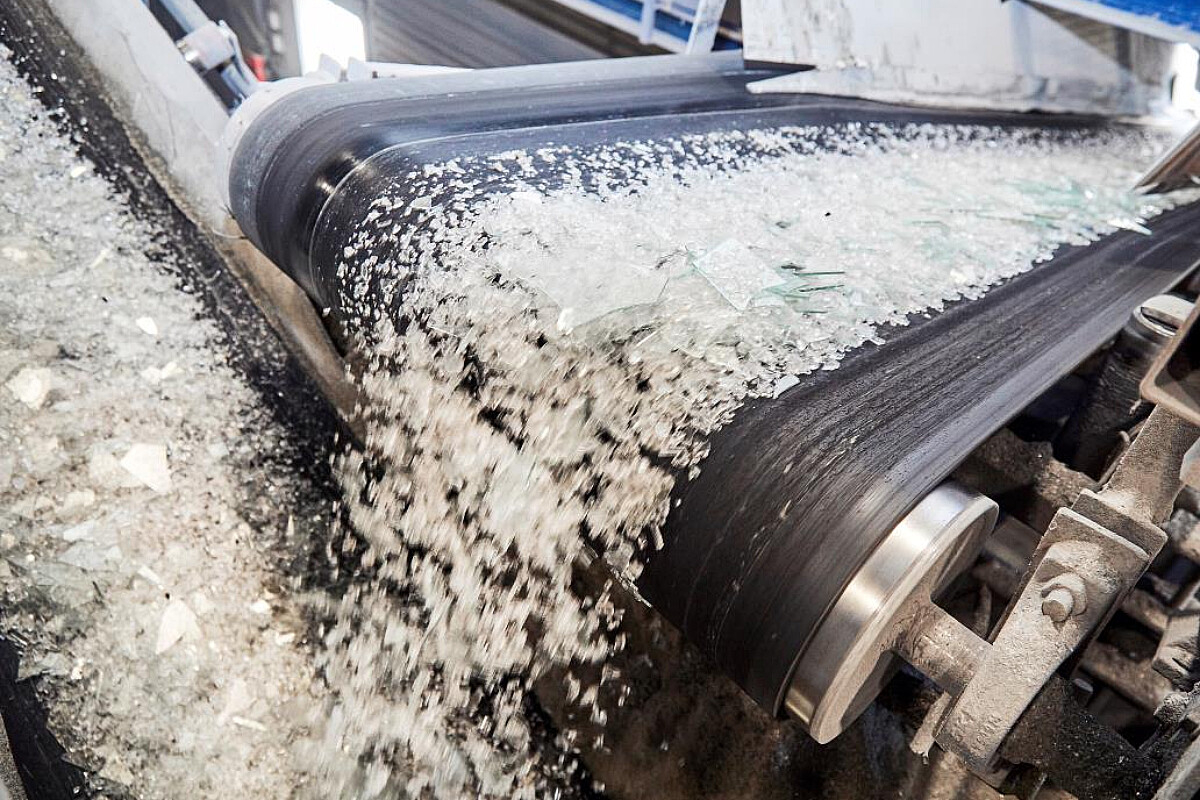
Photo: Maltha
According to Maltha, more than 210 million tonnes of solar panel waste are expected to be generated worldwide by 2050
European project proposes recycling and recovery of solar panel glass
ID no: 24470



Sep 22, 2026



Oct 13, 2026