After three years of declining sales, the Western European window market could grow by 1.2% in 2026. This forecast comes from a new study by Austrian market research company Interconnection Consulting. However, the pace of recovery varies significantly between countries.
In many countries, sales volumes have yet to return to pre-crisis levels. Market growth is being driven by certain regions, while others continue to experience declining volumes.
The DACH region, comprising Germany, Austria and Switzerland, is making the largest contribution to the recovery. In 2026, analysts forecast sales growth of 2.3%, reaching 16.8 million windows.
The number of building permits issued in the region is increasing, but actual construction starts are lagging behind. Property developers are stepping up preparations for new projects but remain cautious about moving into the construction phase.
In Germany, the recovery is being hampered by the conflict in the Middle East and a further rise in construction costs. The situation in Switzerland is more favourable. Housing shortages, low vacancy rates and relatively low interest rates are supporting residential construction. Public-sector contracts are also supporting the construction of educational and healthcare facilities.
In France and the Benelux countries, analysts are seeing the first signs of a recovery in window sales. By contrast, the UK market is expected to contract by 4.9% to 8.96 million windows. This would mark the fourth consecutive year of declining sales. In Italy, demand remains subdued due to restrictions on the government's Superbonus scheme.
According to Interconnection Consulting's forecast, window sales for non-residential construction will increase by 1.7% to 19.3 million units in 2026. In the residential segment, analysts expect growth of 1% to 40.4 million windows.
The share of residential construction in total window sales is expected to decline from approximately 70% in 2022 to 67.5% in 2026.
High construction costs, relatively high borrowing rates and limited housing affordability are dampening demand for new homes. Meanwhile, non-residential construction has weathered the crisis with smaller losses.
The declining share of new construction is particularly noticeable. In 2026, it is expected to account for 31.1% of the Western European window market. In the residential segment, new construction will represent 23%. According to analysts, these figures are at historically low levels.
“New residential construction remains the main factor holding back the recovery of the window market, as high construction costs and limited housing affordability continue to weigh on demand,” says study author Laszlo Barla.
Differences between residential and non-residential construction are also changing the breakdown of window sales by frame material.
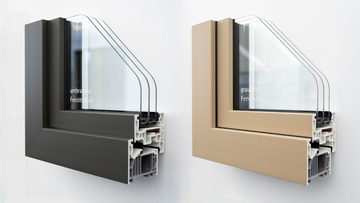
According to Interconnection Consulting's forecast, the share of metal windows in the Western European market will increase from 26.4% in 2022 to 28.1% in 2026. This is being supported by more stable demand in non-residential construction.
At the same time, PVC windows have strengthened their position in recent years in Spain, Portugal and Italy, where metal windows have traditionally held a substantial market share.
“Material trends are far from uniform: while metal windows benefit from the greater stability of non-residential construction, PVC is gaining importance, particularly in some Southern European markets,” explains Laszlo Barla.
Previously, in 2025, Interconnection Consulting reported the first signs of stabilisation in the global window market. The new forecast for Western Europe anticipates a return to growth in 2026, but with significant differences between countries and construction segments.
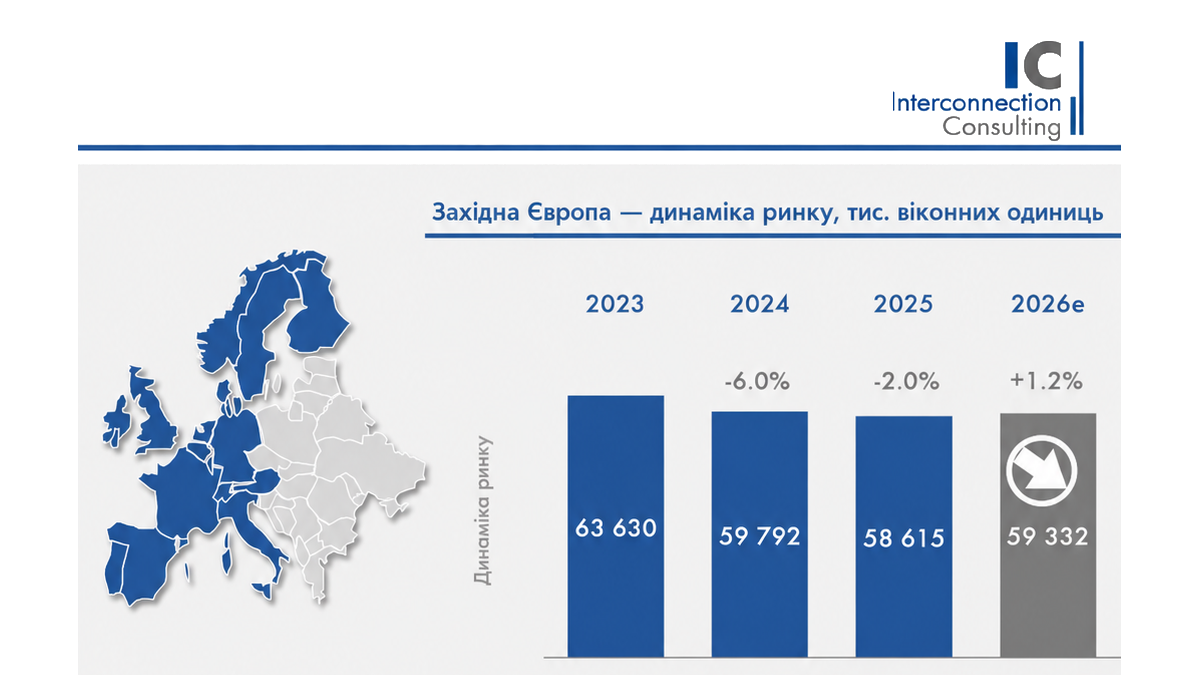
Photo: Interconnection Consulting
Window sales in Western Europe could grow by 1.2% in 2026, although the pace of market recovery varies between countries
Western European window market could grow by 1.2% in 2026
ID no: 24490



Sep 22, 2026



Sep 15, 2026