European industry associations representing window, door and glass manufacturers have published separate position statements on the new Construction Products Regulation (EU) 2024/3110. This is reported in this year's press releases issued by EuroWindoor, AMFT, Tischler Schreiner Deutschland, VFF and Glass for Europe.
EuroWindoor submitted detailed comments on the draft implementing act concerning the Digital Product Passport (DPP) registry.
EuroWindoor Secretary General Frank Koos supports the concept of the Digital Product Passport. "We support the Digital Product Passport as a tool for transparency and circular construction," says Koos. At the same time, he criticises the current draft. "The current draft has been prepared without sufficient consideration of the realities of an industry made up almost entirely of small and medium-sized enterprises. A comprehensive revision is necessary before adoption," Koos adds.
The association criticises the verification procedure through the eIDAS system, estimating that it will cost manufacturers approximately €300–800 per year. EuroWindoor instead proposes access via national business registers. The association also considers registration at the level of every individual product to be impractical for made-to-order products with millions of possible configurations and proposes registration at model or product type level instead.
Tischler Schreiner Deutschland (TSD) criticises the European Commission's draft standardisation request for windows and doors. According to the association, 25 years ago only windows with sound or thermal insulation requirements were subject to regulatory marking (Ü mark). Today, manufacturers face around 60 technical requirements and 39 sustainability requirements. They must also check their products for the presence of 175 different hazardous substances.
TSD President Thomas Radermacher says: "We need approaches that meet the needs of craft businesses." TSD Chief Executive Officer Katharina Hamilscheg adds: "We should not throw the baby out with the bathwater. We need time and new approaches. In custom manufacturing, often in batches of a single product, as is common practice every day in Germany, such a data flow cannot be efficient."
Radermacher also criticises the proposal to declare the worst-case performance values for products in order to simplify declarations. "This is not a genuine solution. We live in a society where competition and quality matter. Particularly in view of energy efficiency and the potential for renovating the building stock, we must make the economic case. Otherwise, the German government will not achieve its energy targets."
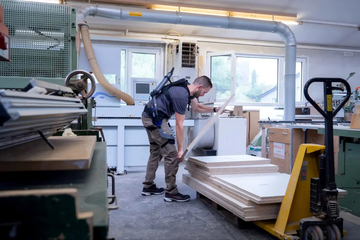
Verband Fenster + Fassade (VFF) has criticised the draft standardisation request for windows and doors. According to the association, the draft in its current form is not suitable for approval. Windows and doors are typically individually configured products with a vast number of variants. Additional requirements for every variant would create a significant administrative and financial burden for manufacturers, particularly small and medium-sized enterprises.
VFF has asked Germany's Federal Ministry for Economic Affairs and Energy not to support the draft in the standardisation committee. The association has also engaged with contacts in the European People's Party (EPP) Group in the European Parliament and has received a positive response to its appeal.
Earlier, ift Rosenheim warned about the risks of the new Regulation, describing it as a potential "bureaucratic monster" for window and door manufacturers. Institute Director Professor Winfried Heusler stated that, under the current interpretation of the CPR, every individual product would require its own Declaration of Performance. With around 70 million windows manufactured in Europe every year, this would mean approximately 6,000 inspections every day for each of the 50 notified bodies.
The Austrian Association of Manufacturers of Metal Windows, Doors, Gates and Facades (AMFT) fully supports the position paper prepared by Verband Fenster + Fassade (VFF) and ift Rosenheim. AMFT has brought together several Austrian organisations around a joint statement on the practical implementation of the new CPR.
The association emphasises the importance of introducing the additional Assessment and Verification System (AVS) 4+. This system provides for software tools and input parameters to be verified by a notified body instead of testing every individual product. AMFT warns that, without a practical approach, the requirements for marking and documentation, including the Declaration of Performance and Conformity (DoPC) and the Digital Product Passport (DPP), will create a significant burden for manufacturers and certification bodies.
Glass for Europe welcomes the revision of the CPR 2024 but expresses concern about the AVS 3+ procedure for verifying environmental declarations.
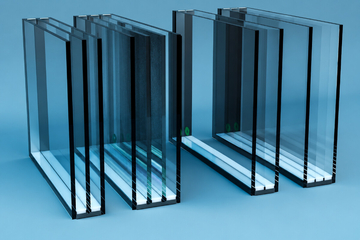
According to Glass for Europe, the EU flat glass sector comprises more than 40 manufacturing plants supplying products to over 1,000 processors. A single manufacturer may offer tens of thousands of product types. Mandatory on-site inspections of every manufacturing plant for every new product type would generate high demand for inspections, substantial costs and delays.
The association proposes making remote inspections the standard procedure. Glass for Europe also recommends allowing the use of previous inspection results for similar data and manufacturing processes.

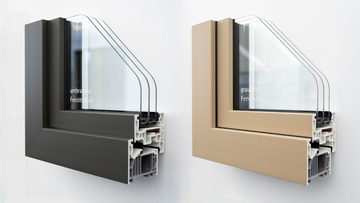
Illustration: VFF
European associations call for a review of the new Construction Products Regulation (EU) 2024/3110
ID no: 24395

Sep 15, 2026





Sep 3, 2026






Sep 22, 2026