The Energy Efficiency Fund has reported that participants of the Ukrainian-Lithuanian round table identified comprehensive district-scale renovation as the next strategic stage in the development of energy efficiency in Ukraine. The event took place at the Embassy of the Republic of Lithuania in Ukraine under the title "Ukrainian-Lithuanian Exchange of Best Practices in Building Energy Efficiency".
The Energy Efficiency Fund was represented by its Director, Yehor Fareniuk, and Chief Financial Officer, Mykola Illinov. The Lithuanian delegation included representatives of the Environmental Projects Management Agency (APVA), notably its Director Gvidas Dargužas, as well as the Mayor of Švenčionys District Municipality, Rimantas Klipčius, and the Director of the Municipal Administration, Jovita Rudėnienė.
The Lithuanian side reaffirmed its commitment to continue supporting Ukraine on its path towards energy-efficient reconstruction. The partners agreed that cooperation between the two countries would be based on long-term planning, the transfer of European expertise, and the development of a municipal approach to housing modernisation.
Participants discussed moving beyond the modernisation of individual apartment buildings towards comprehensive district-scale renovation, involving the refurbishment of entire residential districts or neighbourhoods rather than single buildings. This approach has already proven effective in Lithuania. It enables more efficient use of public and international financial resources while ensuring coordinated cooperation between local authorities, residents and partner organisations, delivering greater economic and social benefits for communities.
Yehor Fareniuk, Director of the Energy Efficiency Fund, stressed that energy efficiency has become one of the key factors underpinning the resilience of both the state and local communities.
"Today, energy efficiency is far more than simply saving gigacalories or reducing figures on utility bills. It is about resilient communities and safe, comfortable living conditions for our people; it is about national energy security and the high quality of post-war recovery," he said.
According to Fareniuk, the comprehensive modernisation of Ukraine's housing stock is among the country's most effective long-term investments.
"The modernisation of Ukraine's housing stock is an indispensable and the most beneficial investment in the future of our country," he added.
Participants also focused on expanding municipal support for thermal modernisation. The Fund's Chief Financial Officer, Mykola Illinov, presented a project for Ukraine's first municipal One-Stop-Shop centre. The centre will be established in Kryvyi Rih at the Institute for City Development in partnership with APVA.
Illinov noted that the foundations of this partnership were laid during a study visit by the Ukrainian delegation to Lithuania.
"That visit became the starting point for establishing a long-term partnership and creating Ukraine's first municipal One-Stop-Shop centre for energy efficiency," he emphasised.
Lithuania's experience is helping to shape a new model for supporting thermal modernisation in Ukraine. This includes developing a network of municipal One-Stop-Shop centres, shifting from the renovation of individual buildings to comprehensive district-scale renovation, standardising procedures, and strengthening the role of local authorities in project delivery.
Gvidas Dargužas, Director of APVA, commented:
"Lithuania's experience demonstrates that long-term results can only be achieved when renovation becomes part of a strategy for the entire community rather than for individual buildings. We see strong determination among Ukrainian institutions and communities to build modern, energy-efficient cities, and we are ready to share our knowledge, lessons learned and practical approaches."
According to preliminary plans, the pilot project in Kryvyi Rih will include 10–15 apartment buildings and more than 1,000 households. The partners expect energy savings of 30–50% and annual carbon dioxide emission reductions of 2,000–3,500 tonnes.
Participants of the round table concluded that the district-scale approach should become the next stage in the modernisation of Ukrainian cities. To achieve this, Ukraine and Lithuania intend to focus their cooperation on developing municipal energy efficiency programmes, establishing a network of regional thermal modernisation support centres, training local self-government authorities, and promoting comprehensive urban district renovation practices.
Earlier, Ukraine became the first country outside the European to begin establishing a New European Bauhaus Academy Hub.
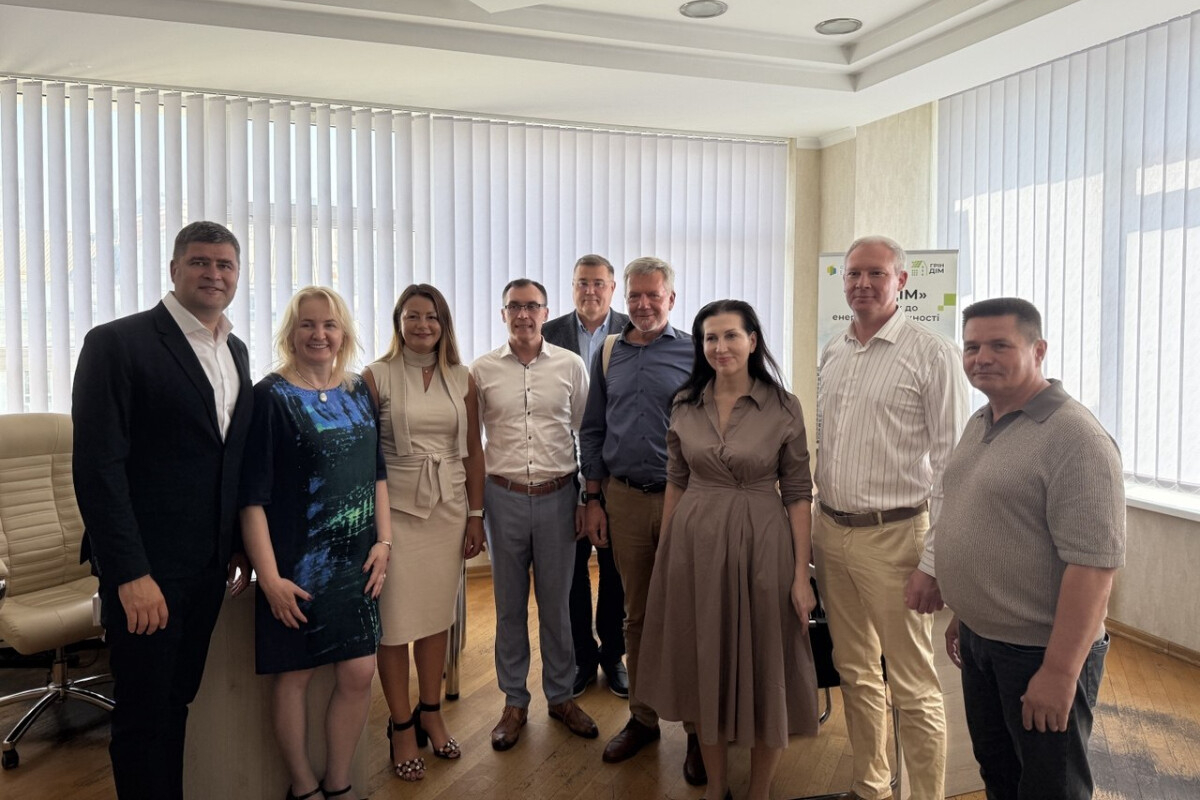
Photo: Energy Efficiency Fund
Participants of the international round table "Ukrainian-Lithuanian Exchange of Best Practices in Building Energy Efficiency"
District-scale renovation should become the next stage of energy efficiency development in Ukraine
ID no: 24358





Oct 20, 2026